

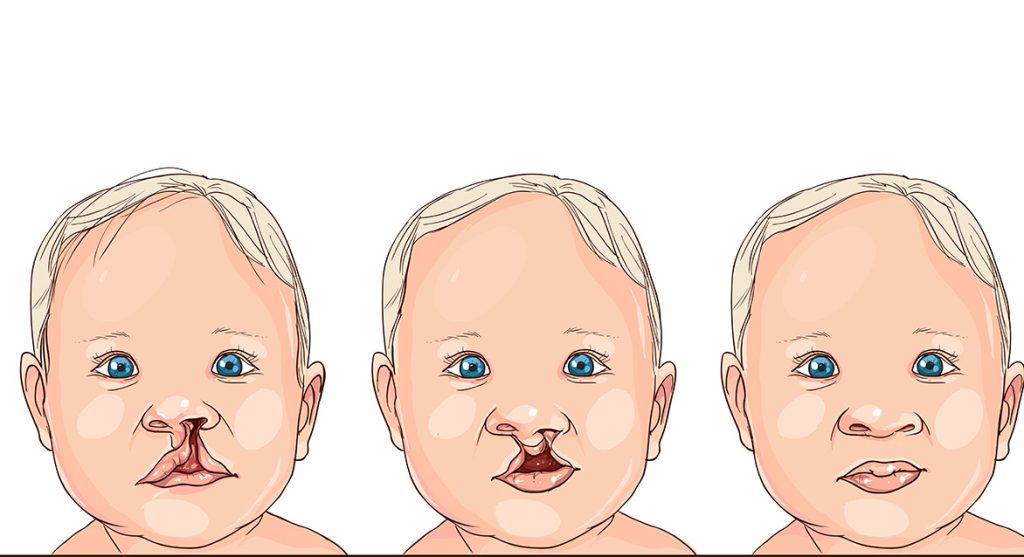
Cleft Lip - Palate
Cleft lip and palate are congenital anomalies observed at birth in infants. A cleft lip is defined as an opening that occurs on one or both sides of the upper lip, while a cleft palate is an opening in the roof of the mouth, resulting from the palate not closing properly. These conditions occur due to the failure of the tissues in the baby’s facial region to fuse during fetal development, leading to both aesthetic and functional issues. Cleft lip and palate can occur in both male and female infants and are common anomalies noticeable at birth.
Cleft lip and palate can lead to various challenges. Infants may experience difficulties with feeding, delayed speech development, and a higher susceptibility to middle ear infections. Additionally, aesthetic concerns may necessitate surgical correction. The surgical intervention aimed at repairing the clefts seeks to address many of these problems.
The treatment process typically begins in infancy. Cleft lip surgery is usually performed when the baby is between 3 to 6 months old. This surgery involves joining the lip muscles and tissues to achieve a more natural appearance. Cleft palate surgery is generally done between 9 to 18 months of age. This procedure aims to close the palate, improving the baby’s speech and feeding functions.
The recovery period after surgery can take several weeks, and adhering to the doctor’s care instructions is crucial. During recovery, careful monitoring of the infant’s feeding methods and oral hygiene is necessary. In some cases, multiple surgeries may be required, especially if additional adjustments are needed for speech development or growth. Additional support such as orthodontic treatment and speech therapy may also be necessary throughout the child’s growth and development.
Cleft lip and palate are congenital anomalies that can be successfully treated with modern surgical techniques. Surgical intervention allows the child to undergo a more normal development process both aesthetically and functionally. A multidisciplinary approach is essential during the treatment process, involving plastic surgeons, orthodontists, speech therapists, and pediatricians. This collaboration helps ensure that children grow up healthier both socially and physically.
In conclusion, cleft lip and palate can be significantly corrected with appropriate surgical and medical approaches. These treatments aim to improve the child’s aesthetic appearance as well as enhance speech, feeding, and overall quality of life.